
I have spent 25 years telling people to do the thing they do not want to do. As a physical therapy assistant, I taught patients to start with ten minutes of something boring and build from there. So when I told my husband Tom I wanted a sauna in the basement, he did what spouses do: he asked how much space it would take, how much it would cost to run, and whether I would actually use it after the first month. Those are the same questions I would ask, and they are the questions this review answers. I tested the OUTEXER one person infrared sauna for six months in our finished basement in Duluth, and I kept notes the whole way.
Here is the honest version. The OUTEXER sauna is not a spa. It is a wooden box with heaters that gets warm and makes you sweat. That is exactly what I wanted, but it took me a few weeks to understand what it is not. It is not a medical device, it is not a weight loss machine, and it is not a substitute for moving your body. What it is, is a reliable way to spend twenty warm minutes at the end of a cold day, and that has been worth more to me than I expected.
The Quick Verdict
A solid, no-frills one person infrared sauna that does what it promises. It is easy to assemble, fits in a corner, and I use it almost daily. It is not the most comfortable sauna I have sat in, and the heat is gentle, not intense. For the price and the footprint, it is a fair trade.
Amazon Check Today's Price →Want the short version? It fits in a corner and I use it almost every day.
The OUTEXER one person infrared sauna has been in our basement for six months. If you are weighing whether a compact sauna makes sense for your home, this is the one I would start with.
Amazon Check Today's Price on Amazon →How I've Used It
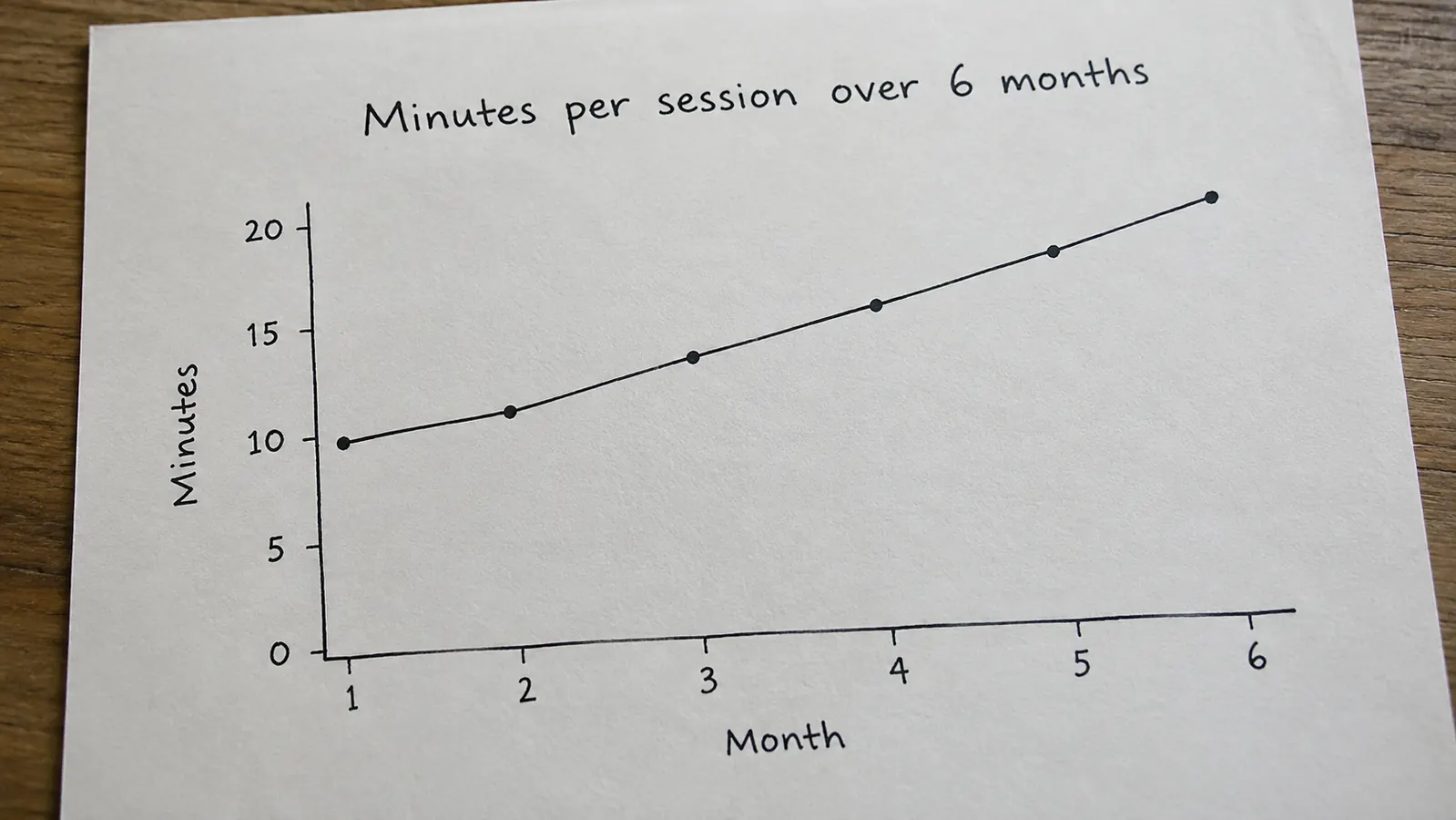
I am 54, retired from a job that left me with stiff knees and a lower back that complains when I sit too long. I walk on the treadmill most mornings, and in the evenings I have a routine: water, a towel, twenty minutes in the sauna, then a shower. I started at ten minutes and worked up to twenty over the first month. I have used it at least five days a week since it arrived, including through a January cold snap.
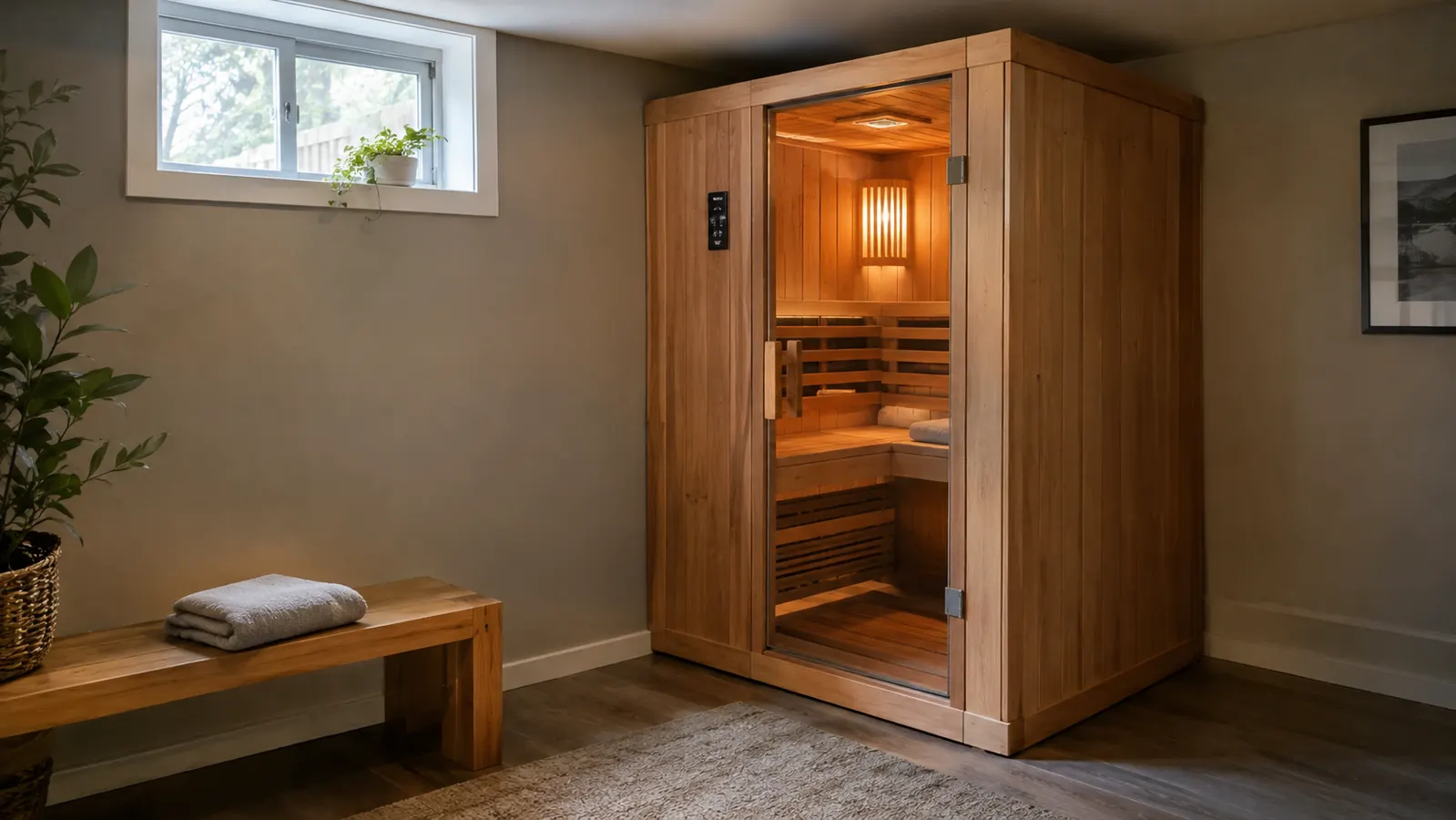
The sauna sits in a corner of our finished basement, about three feet from the wall on each side. It takes up roughly the floor space of a loveseat. Tom helped me carry the box down the stairs, and I assembled it myself in about two hours with the included hex wrench. The instructions are adequate, which in my experience means you will look at them twice and then figure out the rest.
I keep a small notebook on the shelf next to it. I write down the date, how long I sat, and how I felt before and after. That is the physical therapy habit and it has been useful, because the changes were gradual. I did not feel different after week one. I noticed after about a month that my evening stiffness was less noticeable, and after three months I stopped thinking about it and just enjoyed the routine.
The first session, I set the timer for ten minutes and sat there watching the thermometer like it owed me money. I barely sweated. Tom, who came down to check on me, pointed out that I had skipped the warm-up. He was right. The second time I turned it on, waited the full half hour, and the difference was night and day. By the end of the first week I had learned the rhythm: turn it on, fill my water glass, change into shorts, and by the time I was ready the sauna was ready too. The January cold snap was the real test. On the morning it hit minus twenty, my treadmill session was shorter than usual and my knees made their opinion known on every step. That evening I sat a full twenty minutes, and I slept better than I had in a week. I wrote 'knees quiet' in the notebook, which is about as emotional as I get.
Nobody tells you that the best part of a home sauna is not the heat. It is the twenty minutes where nobody needs anything from you.
What Nobody Tells You Before You Buy
Let me start with the thing I wish someone had told me: infrared heat feels different from a traditional sauna. A steam sauna hits you with hot air and it can be intense. Infrared warms you from the inside out, which means the air stays cooler and the heat feels softer. Some people love that. I like it, but I also understand why some reviews say it does not get hot enough. It does not reach the temperatures of a wood-fired sauna. That is not a defect. It is the design.
The second thing is the warm-up time. The OUTEXER sauna takes about twenty to thirty minutes to reach its working temperature. That means you need to plan ahead. You cannot decide you want a sauna and step in right away. I turn mine on, set a timer, and read a book while it warms. If you are the kind of person who wants instant heat, this will annoy you.
The third thing is the space. It fits in a corner, yes, but it needs room to breathe. The manual recommends clearance around the unit, and I found that three feet gave the best airflow. You also need a place to put the door when it is open, and a path to walk around it. In a small basement, measure twice before you order.
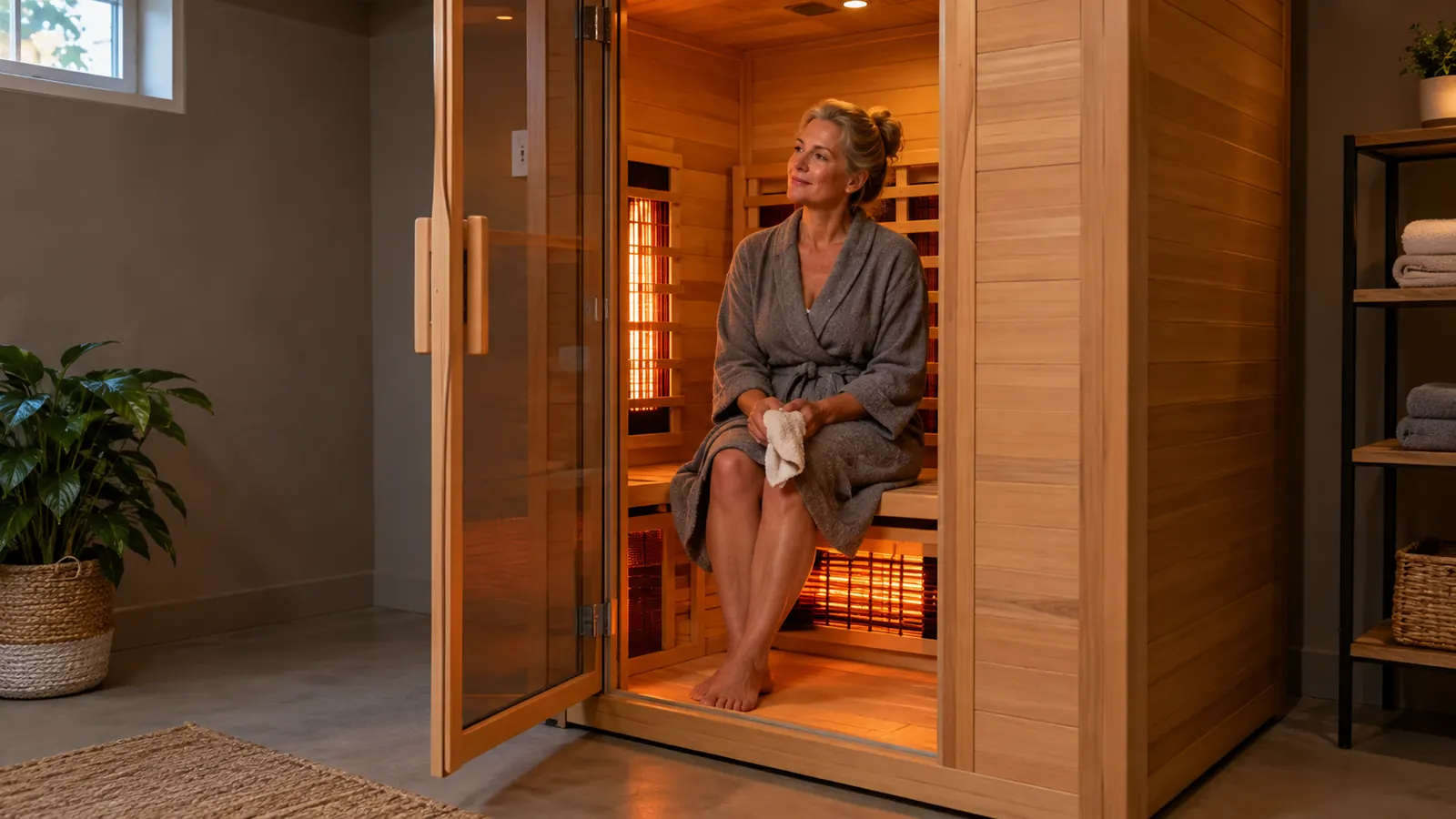
The first time I stepped in, I checked the thermometer on the wall and it read 120 degrees. I expected to be hit with a wall of heat like the sauna at the community pool. Instead it felt like sitting in a warm closet. The heat comes from the panels on the walls and under the bench, so your legs and back get it first while the air near your head stays comfortable. That is why the ceiling thermometer reads lower than you expect. It took me three sessions to stop comparing it to a traditional sauna and just accept what it is. The other thing nobody tells you: the sweat is real. I read reviews calling infrared a dry heat and expected to barely perspire. By minute fifteen on my third session I had a towel draped over my knees because the drip was getting on the bench. I keep a second towel on the floor now, and I wash the bench cover weekly.
The Setup: What It Actually Took
The box arrived on a pallet, and it was heavy. Tom and I eased it down the basement stairs, which I do not recommend doing alone. Inside were panels of Chilean pine, a bench, the control panel, and a bag of screws and brackets. The wood had a mild smell at first, like a new piece of furniture. It faded within a week.
Assembly took me about two hours. The panels fit together with interlocking edges and the included hex wrench. I am comfortable with tools but not especially handy, and I did not need help beyond lifting the roof panel into place. The instructions are printed in small type and the diagrams are small, but the process is straightforward. If you have assembled flat-pack furniture, you can assemble this.
One thing to know: the sauna plugs into a standard 110-volt outlet. I did not need an electrician, and I have not tripped a breaker in six months. The 1050-watt heater draws less than a space heater, which surprised me. The cord is long enough to reach the outlet behind the sauna, and I used a basic power strip with a surge protector.
The box was roughly the size of a tall dresser, and we had measured the basement door before we ordered, which saved us from a bad afternoon: the box cleared the door frame with about two inches to spare. Inside, the panels were wrapped in plastic and separated by cardboard, and every piece was labeled with a letter that matched the diagram. I laid them out on the floor in order before I started, the way I used to lay out exercise bands for a new patient. The one moment that nearly stumped me was the roof panel. The diagram showed two people lifting it, and I understand why. It is not heavy, but it is awkward, and the interlocking edges have to line up while you hold it level. Tom came down for that part, and after that it was a matter of tightening screws. The whole thing took me from about ten in the morning to noon, with a coffee break in between.
Daily Use: What It Feels Like
I sit on the bench with my feet on the floor, a towel under me, and a small towel around my neck. The bench is comfortable for about twenty minutes. After that, I want to move. The ceiling is low enough that I cannot fully stand, which is fine for sitting but worth knowing if you are tall.
The control panel is simple: a temperature setting and a timer. I set it to about 140 degrees Fahrenheit, which is warm enough for me. The heater panels are on the walls and under the bench. They warm up quickly, and the wood absorbs the heat and holds it. The air inside stays comfortable, and I sweat more than I expected. That is the point, and it works.
I read a book or just sit with my eyes closed. The sauna is quiet, which I appreciate. There is no fan noise, no hum, just the occasional creak of the wood as it warms. It has become my evening wind-down, the way other people use a cup of tea. I have fallen asleep in it twice, which tells you how relaxing it is.
One thing I did not expect is how much I look forward to the shower afterward. The sauna leaves you warm and a little flushed, and the cool water feels better than it has any right to. I have started keeping a robe on the hook outside the door so I do not have to walk across the basement in a towel. Small things, but they are what make a routine stick. On the evenings when I skip it, I notice. Not dramatically, but I sit down to read and my back is tighter, or my knees feel stiff when I get up from the couch. The difference is not huge. It is just enough to remind me why I walk down to the basement at eight o'clock. My notebook has entries for 143 sessions over six months, and the pattern is consistent: the days I use the sauna, I sleep better and move easier the next morning.
The Cost Question
I am not going to give you a dollar figure, because the price changes and I did not pay full retail. What I will tell you is how I think about the cost. The OUTEXER sauna costs less than a gym membership for two people over a year, and it costs less than a weekend at a spa. It also costs less than most full-size saunas, which start at several times the price and require more space and often a dedicated electrical circuit.
The running cost is small. At 1050 watts, an hour of use is roughly the same as running a space heater. I use it for about forty minutes a day including warm-up, so the added electricity is modest. I noticed it on the bill, but it was not a shock.
The bigger cost is the space. A one person sauna takes up a corner of a room, and it is not something you can easily move once it is assembled. If you live in an apartment or plan to move soon, think hard about whether you want to haul this to the next place. It is not a portable device.
What It Does and Does Not Do
I want to be clear about what I am not claiming. I am a retired physical therapy assistant, not a doctor, and I tell everyone the same thing: check with your own doctor before starting heat therapy, especially if you have a heart condition, are pregnant, or take blood pressure medication. Heat raises your heart rate and can affect blood pressure, and that is worth taking seriously.
What I can tell you is how it feels. After a walk on the treadmill, the sauna helps my legs feel less tight. On days when my lower back complains, twenty minutes of warmth makes it easier to get up from the couch afterward. I cannot prove it is the sauna, and I do not need to. It is part of a routine that includes walking, stretching, and sleeping well.
What it does not do: it does not make you lose weight, it does not detoxify you in any measurable way, and it does not cure joint pain. If anyone tries to sell you those claims, be skeptical. What it can do is make you sweat, relax, and feel warmer and looser. That is enough.
What I Liked
- Fits in a corner of a finished basement with about three feet of clearance
- Assembled in about two hours with basic tools and the included hex wrench
- Plugs into a standard outlet, no electrician needed
- Simple controls: temperature and a timer
- Quiet, with no fan noise
- The wood smells pleasant at first and fades within a week
- I use it almost daily, which is the real test
Where It Falls Short
- Takes twenty to thirty minutes to warm up, so you have to plan ahead
- The heat is gentle, not intense, and may not satisfy traditional sauna fans
- Low ceiling means you cannot stand up fully inside
- The bench is comfortable for about twenty minutes, then I want out
- Heavy and not easy to move once assembled
- The instructions are small-print and the diagrams are cramped
Who This Is For
This sauna is for someone who wants a quiet, warm ritual at home without spending cabin-sauna money. It is for people who like the idea of a spa but do not want to drive to one. It is for people with sore muscles after workouts, stiff joints in winter, or just a hard time unwinding at the end of the day. If you are the kind of person who will use something five times a week because it is right there, this is for you.
Who Should Skip It
Skip it if you want intense, traditional sauna heat. Skip it if you are tall and want to stand inside. Skip it if you want something you can move easily or take camping. And skip it if you are hoping it will do something medical. It is a warm box, not a treatment. If you go in with that expectation, you will not be disappointed.
Still on the fence? I would buy it again.
Six months in, the OUTEXER one person infrared sauna is part of my evening routine. It is not perfect, but it does exactly what I need it to do. If you have the space and the patience for a warm-up, it is worth a look.
Amazon Check Today's Price on Amazon →