
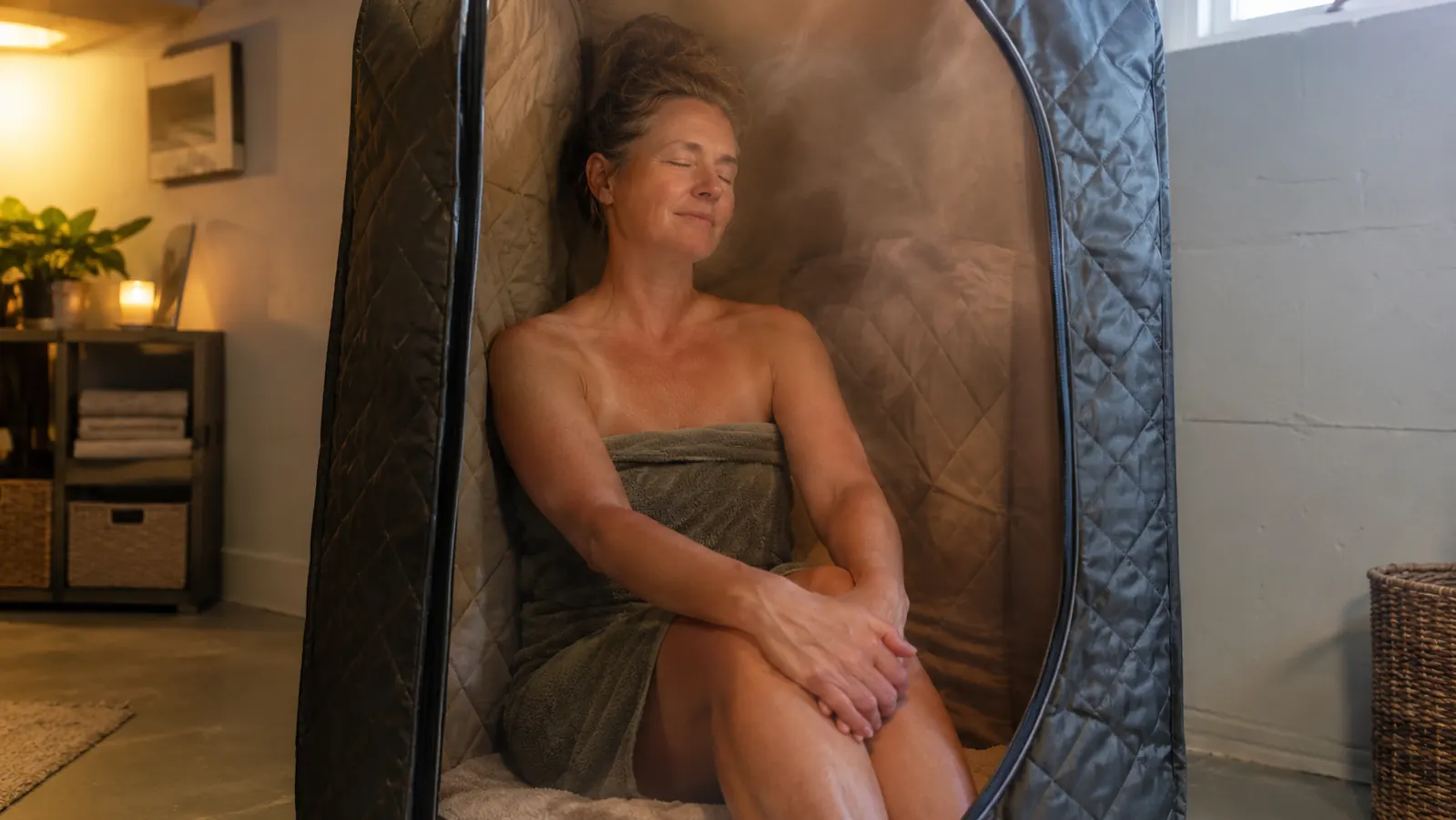
Last October, I cleared a corner of our basement, set up a folding chair, and zipped myself into a portable tent with a steam hose attached to an 800-watt generator. My husband Tom thought I had lost my mind. Six months later, that corner is still occupied, and the Durasage Portable Steam Sauna has become the most dependable part of my winter routine.
I spent 25 years as a physical therapy assistant, which means I spent 25 years lifting, transferring, and bracing people who were having bad days. My knees and lower back have opinions about that now. I also live in Duluth, where January is a long, gray month and the cold settles into joints that already complain. I wanted a way to warm up stiff muscles and wind down at the end of the day without driving anywhere. A steam sauna tent seemed like the kind of thing that works better in a catalog than in real life. I was wrong, mostly.
The Quick Verdict
The Durasage Portable Steam Sauna gives me a genuine sweat, a quiet 40-minute ritual, and a reason to look forward to winter evenings. It is not a substitute for a real sauna, and it asks for a little maintenance, but for a basement corner it has earned its spot.
Amazon Check Today's Price →A real sweat in your basement, without the renovation
The Durasage Portable Steam Sauna sets up in about ten minutes, runs on a standard outlet, and folds away when you need the space. I have used mine for six months and it still starts on the first try. See today's price and current owner reviews on Amazon.
Amazon Check Today's Price on Amazon →How I've Used It
My routine settled in fast. Three or four evenings a week, after dinner, I fill the generator's reservoir with water, set the timer for 40 minutes, and let it heat while I change. The tent lives in the corner, so setup is just unfolding the chair and zipping the tent around it. By the time I sit down, the steam is already coming through the hose.
I started with 15-minute sessions because I was not sure how the heat would feel. Within two weeks I was up to 30 minutes, and by a month I was using the full 40. I keep a bottle of water on the floor beside the chair and a washcloth over my shoulders to catch the drips. When the timer beeps, I unzip, step out, and let myself cool down slowly in the basement before heading upstairs.
I walk on the treadmill most mornings, and on the days I do, the sauna in the evening feels especially good. The 60-minute timer on the generator has never once failed me. I set it for 40 and it clicks off right on schedule. That matters more than it sounds like it should. When you are sitting in steam, you do not want to be doing arithmetic about how long you have been in there.
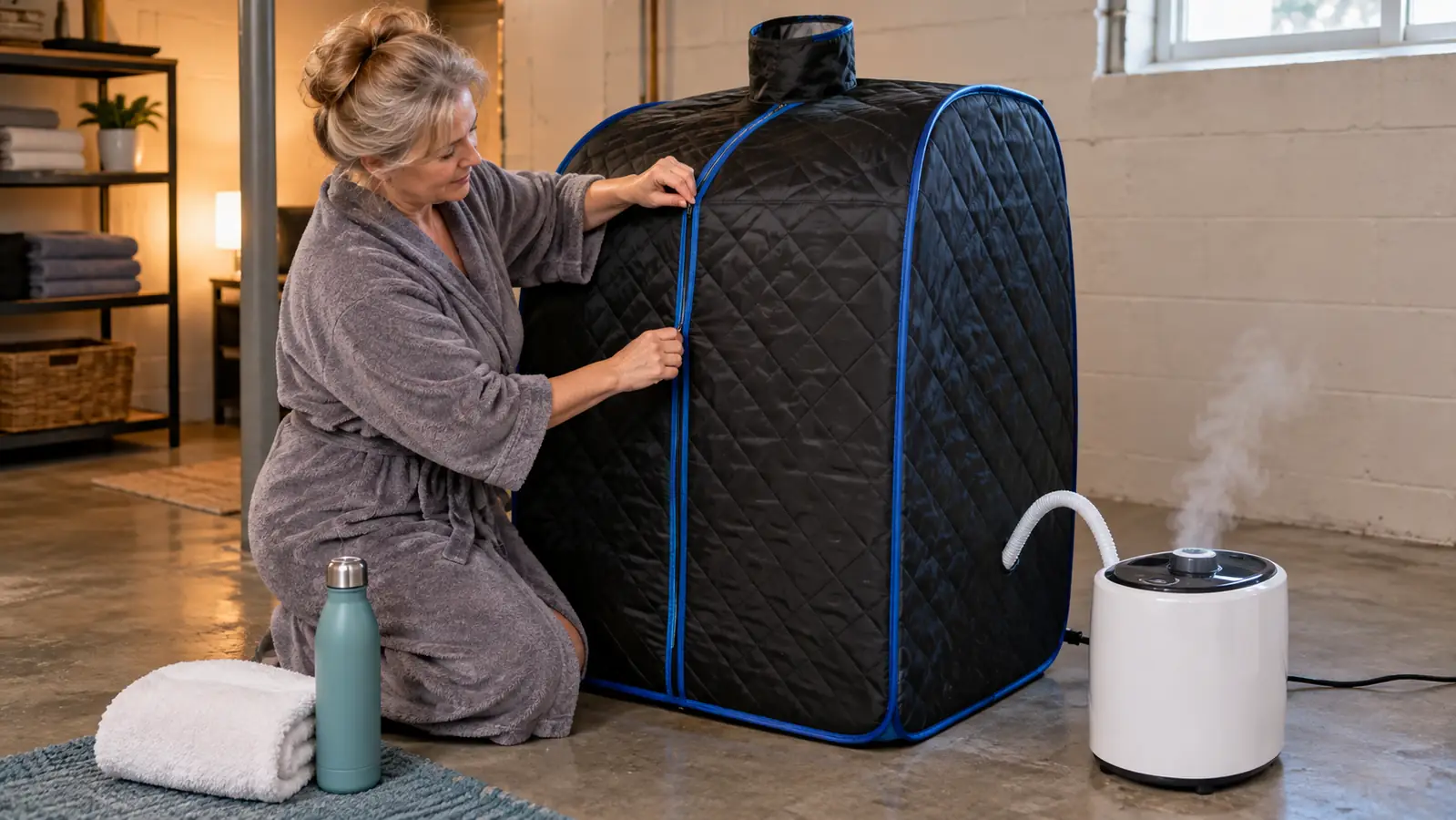
The first setup took me about 20 minutes, mostly because I read the instructions twice. The tent unfolds, the chair goes inside, the hose connects to the generator, and the reservoir fills with water. The only tool I needed was my own patience. After that first time, setup was a ten-minute job, and most of that is waiting for the steam to build.
I also learned to plan the cool-down. I keep a robe and a pair of slippers at the bottom of the basement stairs. When the timer beeps, I unzip, wrap the robe on, and sit on the stairs for a few minutes before I go up. That slow cool-down is half the reason my joints feel better the next morning.
I also learned to drink water before I get in, not just after. A 40-minute sweat pulls a surprising amount of fluid out of you, and I noticed the difference on the nights I skipped the pre-session glass. It sounds like small advice, but it is the difference between feeling restored and feeling wrung out.
What the Durasage Steam Sauna Actually Is
Let me describe it plainly. The Durasage is a collapsible tent, a folding chair, and a separate steam generator that sits outside the tent. You fill the generator's reservoir, turn it on, and steam travels through a hose into the tent around your body. Your head stays out through an opening at the top, which means you can sit comfortably, breathe normally, and even read or watch something on a tablet while your body gets the heat.
That last part is the reason I kept using it. A traditional sauna wraps your head in the same heat as your body, which is part of the experience but also part of the reason I found long sessions hard. With the Durasage, my head stays cool and my body sweats. I can sit for 40 minutes without feeling like I am suffocating.
The generator itself is simple. There are only two things to touch: the reservoir and the timer. The 800-watt unit heats a small tank of water, and the timer runs up to 60 minutes. There is no app, no Bluetooth, no settings to fiddle with. That simplicity is a feature when you are half-asleep and just want heat.
Some of what makes this tolerable is not obvious from the product photos. The chair is low enough that I can get in and out without feeling like I am climbing. The tent is tall enough that I am not hunched over. The steam comes in steadily rather than in bursts, so the heat builds gradually instead of slamming you all at once.
Temperature is the thing everyone asks me about. It is not a barrel sauna. It does not get to 180 degrees. The heat is wet and close, and it builds on your skin rather than in the air. I do not use a thermometer. I go by how I feel, and I keep the sessions shorter on nights when I am tired. That is the same advice I gave patients for 25 years: listen to your body, not the timer.
How It Held Up Over a Season
I am hard on gear, and I was ready to be disappointed. Six months of near-daily use in a basement that hovers around 58 degrees in January is a fair test. The zipper still runs smooth. The tent shows no tears. The generator starts on the first try every time, and the timer still clicks off at the number I set.
The only maintenance I have had to do is the obvious kind. I wipe the inside of the tent down after every few sessions so it does not get musty. I leave the zipper open and let it air out overnight. I use filtered water in the reservoir, because our tap water in Duluth is hard and I did not want to find out what scale would do to the heating element. That is the whole list.
The one thing I did not expect was how much I would look forward to it. By February, the routine had become the anchor of my evening. Tom started timing his reading so he could sit in the basement and keep me company while the timer ran. That is not a spec-sheet feature, but it is the reason the thing is still in the corner.
One thing I did not anticipate was how much condensation collects on the inside of the tent in a cold basement. I keep an old bath towel on the floor under the chair, and I shake the tent out before I fold it. It takes thirty seconds and it keeps the whole setup from feeling damp.
Six months in, the zipper still runs smooth, the generator starts on the first try, and I still look forward to the 40 minutes of quiet.
The Limits Nobody Mentions
Let me be straight about the downsides, because they are real. First, the heat is wet heat. If you hate humidity, you will hate this. The air inside the tent gets heavy fast, and some people find that uncomfortable before they find it relaxing. Second, your head stays cool while your body sweats, which is great for reading but means you never get that all-over, head-to-toe sauna feeling.
Third, it takes a little discipline to keep clean. A tent that gets zipped up with sweat inside will get musty if you ignore it. I wipe mine down and let it air out, and I would not skip that step. Fourth, the generator makes a soft hum and a faint gurgle as it heats. It is not loud, but it is not silent, and if you are the kind of person who needs total quiet to relax, that will bother you more than it bothered me.
Fifth, the heat-up time is longer than the marketing implies. From a cold start, the steam takes a good 10 to 15 minutes to build. That is fine once you build it into your routine, but do not expect to walk downstairs and step into a hot tent. Sixth, you will refill the reservoir more often than you think, especially if you use the full 40 minutes.
Finally, this is not a medical device. It is a warm, humid place to sit. I tell everyone the same thing I told my patients: check with your own doctor before you start heat therapy, especially if you have heart issues, blood pressure concerns, or are pregnant. Heat feels good, but it is a stress on the body, and it should be treated with respect.
How It Compares to an Infrared Blanket
I tested an infrared blanket before I bought this tent, and I wrote up the comparison for anyone trying to decide between the two. The short version is that the blanket is easier to store and cheaper to run, but the tent gives you a different experience: you sit in steam, you sweat more visibly, and the ritual feels more like a sauna and less like a heating pad. For me, the ritual was the point.
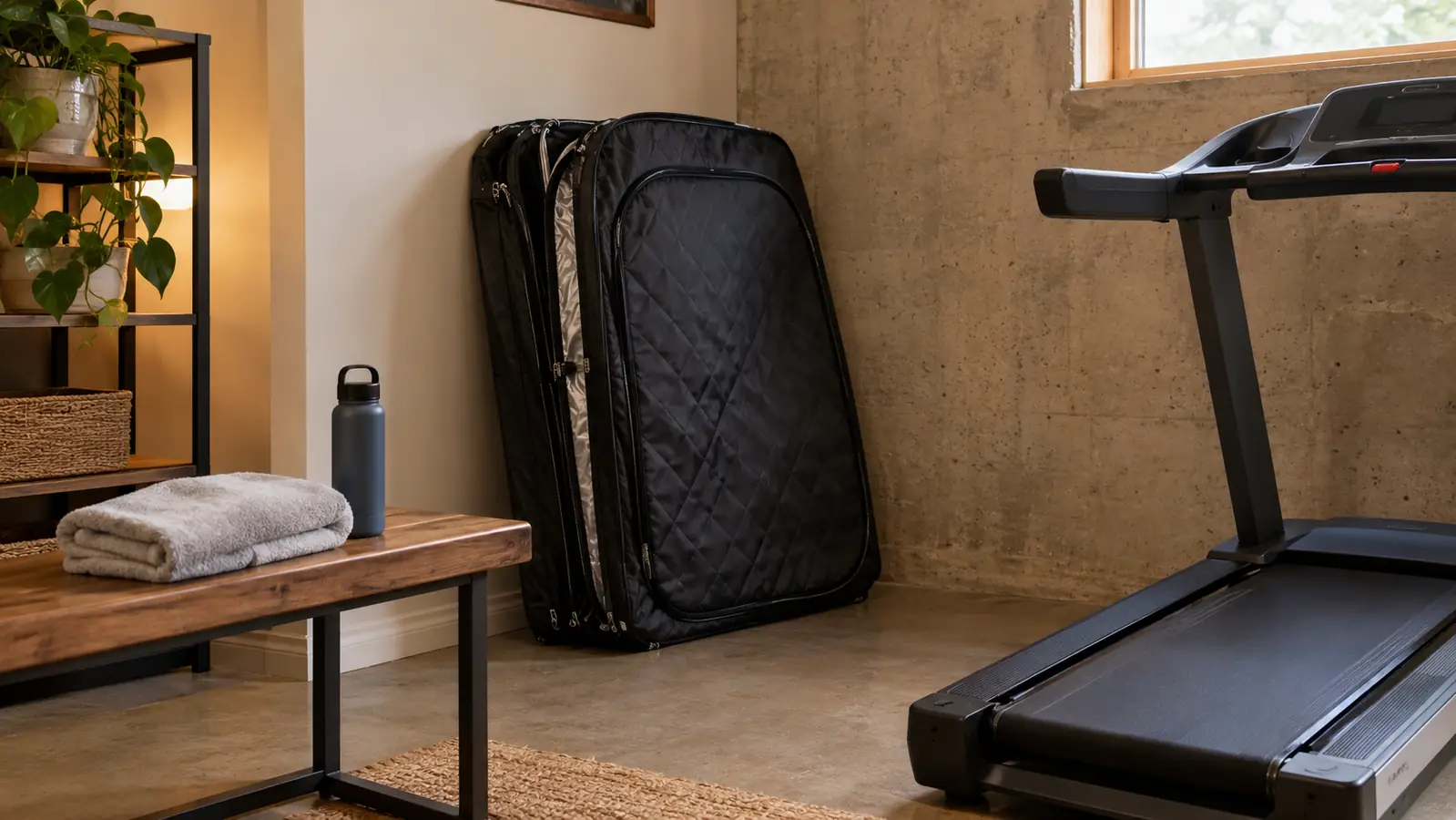
I also thought hard about a real sauna. A built-in unit would be wonderful, but it means a dedicated space, ventilation, and a much larger number on the receipt. The Durasage sits at a small fraction of that price, uses a standard outlet, and folds down to a corner when guests visit.
The other alternative was doing nothing, which is what I did for the two winters before this one. I can tell you from experience that a heating pad on the couch is not the same as sitting in steam for 40 minutes with nothing to do but breathe.
If you have a gym membership with a sauna, you already know whether this routine is for you. The difference is that the gym sauna requires a drive, a schedule, and a locker room. The tent is always right there in the basement, which is exactly why I used it three times a week instead of once a month. I put together a list of reasons a portable steam sauna fits a basement corner, and the short version is this: proximity wins.
What I Liked
- Genuine, visible sweat within 10 to 15 minutes
- Sets up in about 10 minutes in a small corner
- Runs on a standard outlet with a dependable 60-minute timer
- Folds away when you need the space back
- Head stays out, so long sessions stay comfortable
- A fraction of the price of a built-in sauna
Where It Falls Short
- Wet heat is not for everyone
- Needs regular wiping and airing out to avoid mustiness
- Generator hums and gurgles softly during use
- Not as hot as a traditional sauna
- You manage water, heat-up time, and cleanup yourself
- Not a medical device and not a substitute for medical advice
Who This Is For
This is for people like me: adults in their forties, fifties, and sixties with stiff joints, tight backs, and long winters. It is for people who want a recovery ritual at home without renovating a room. It is for people who are curious about saunas but not ready to spend on a built-in unit. It is for people who need to sit still for half an hour and let the heat do the work. If you have a corner, an outlet, and twenty minutes, this will probably earn its spot.
Who Should Skip It
Skip it if you want dry, high heat. Skip it if you are claustrophobic, because zipping yourself into a tent is a specific feeling that a photo does not convey. Skip it if you do not want to wipe down a tent and air it out, because that maintenance is not optional. And if you have a health condition that makes heat risky, talk to your doctor before you buy anything. This is a comfort tool, not a treatment.
If you have an empty corner, this is the cheapest way to find out if a sauna routine is for you
The Durasage Portable Steam Sauna has been in my basement for a full season and it has earned its place. It is not a barrel sauna and it will not turn you into a different person. It is a dependable, affordable way to build a heat routine at home. Check today's price on Amazon.
Amazon Check Today's Price on Amazon →