
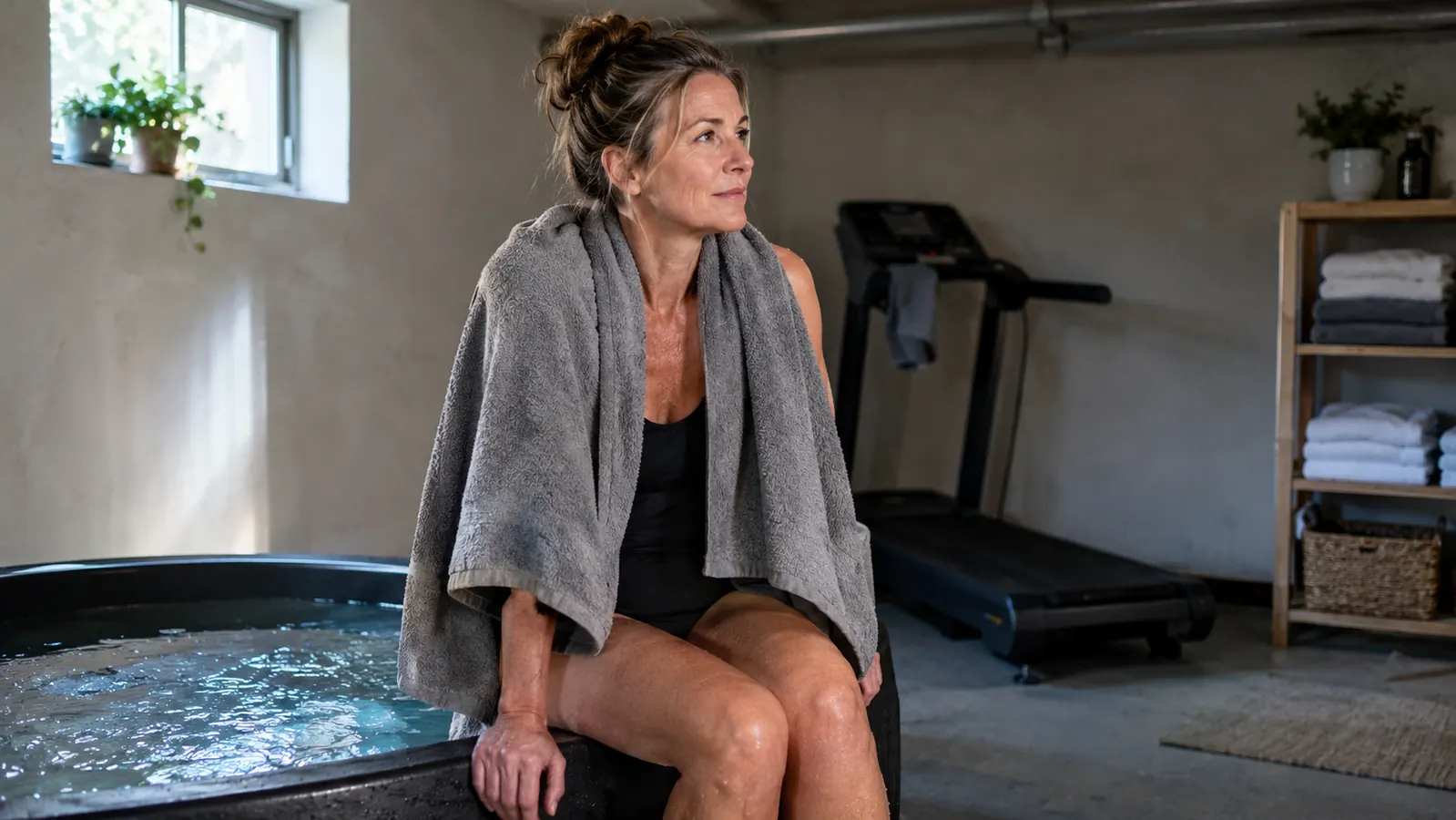
The first time I climbed into the Bubplay cold plunge tub, I lasted about 40 seconds and spent the rest of the day telling anyone who would listen about it. This is the honest review I wished I had read before I ordered one: what the setup really takes, what it costs beyond the sticker, and what cold water actually does for a 54-year-old body with stiff knees.
I am a retired physical therapy assistant, so I spent 25 years telling people to do the boring things: walk, stretch, use the ice pack for twenty minutes. I was not the person who buys a cold plunge tub on a whim. But after a long Duluth winter, with my lower back complaining and my knees stiff from years of lifting and transferring patients, I wanted something that made me feel like I had done something for my body. So I ordered one, set it up in the corner of our finished basement, and kept notes for two months.
The Quick Verdict
A sturdy, well-made tub that does exactly one thing: holds cold water and holds you. Setup and upkeep are real work, but the routine has earned its corner of my basement.
Amazon Check Today's Price →Setup took a full afternoon, a second pair of hands, and more water than I expected. If that sounds doable, the tub is the part that held up.
This is the plain-spoken version: the Bubplay tub is a sturdy container for cold water, and the cold has to come from somewhere. If you have a corner for it, a helper for the unboxing, and a hose, the rest is routine.
Amazon Check Today's Price on Amazon →How I've Used It
The tub arrived on a Tuesday in a box big enough to make me question my choices. Tom and I carried it from the front door to the basement, and I would not want to do that alone. We had to angle it around the stair rail and take a break halfway down. The tub itself is sturdy, with thick walls and a cover that actually fits. We set it up on a tarp near the floor drain, which I recommend even if your basement is finished. You will splash, and the tarp has saved the floor more than once.
Filling it took about forty minutes with our garden hose, and I checked the temperature with a floating thermometer before I got in. It read 51 degrees on the first fill, colder than I expected for February. That was the first thing that surprised me: nobody mentions how much water these things hold, and nobody mentions that the water comes out of your tap at whatever temperature your tap water is. In Duluth in February, that is very cold. In Duluth in July, it is not cold at all. The tub does not chill itself.
That is the thing I want to be honest about up front. The Bubplay tub is a container. It holds cold water beautifully, and the cover kept the temperature steady overnight, which impressed me. But the cold has to come from somewhere. In the winter, the basement did the work. In the summer, I had to think about ice or a chiller, and that changes the whole cost picture.
The Part Nobody Warns You About: Keeping It Clean
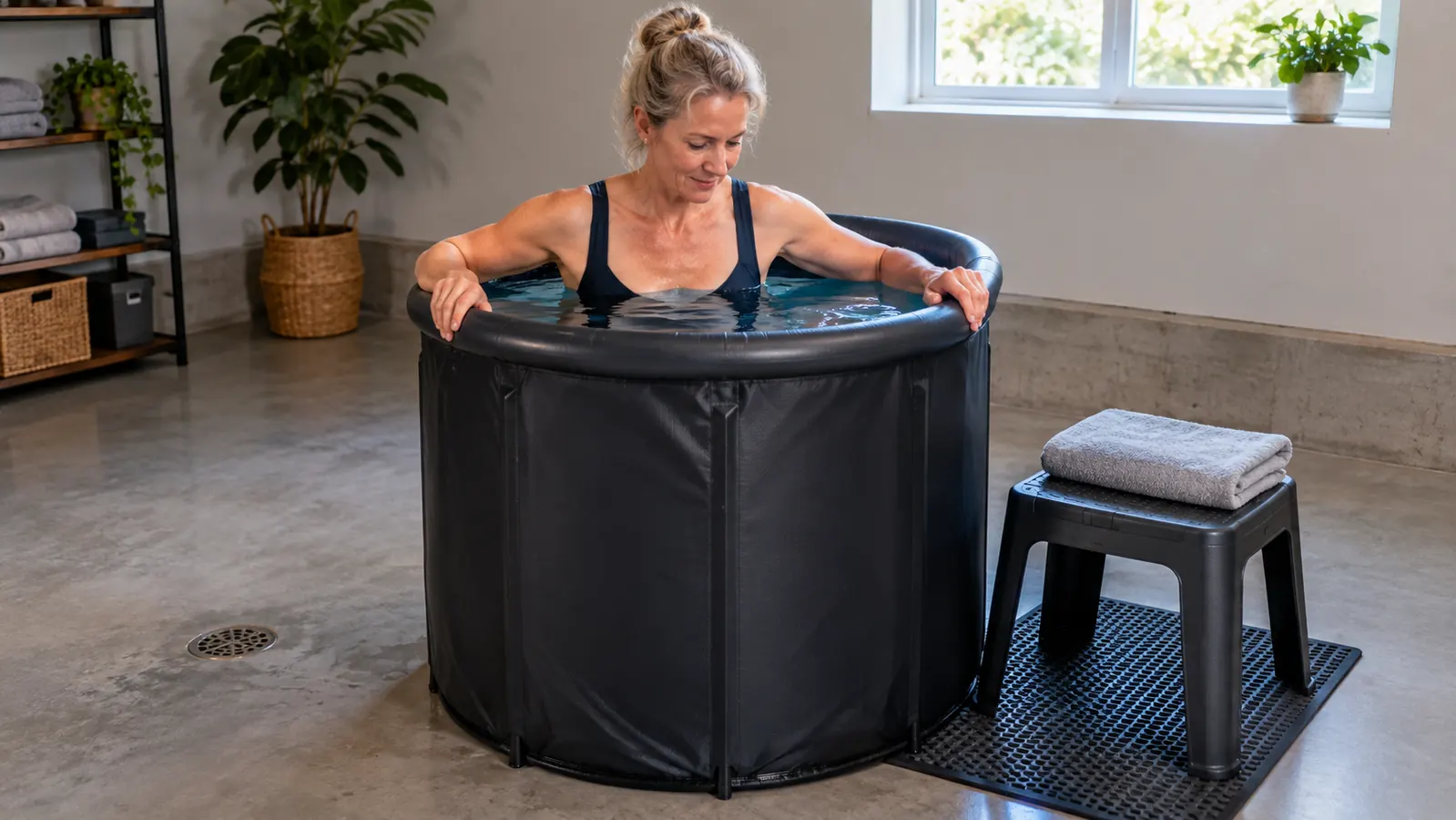
Here is what nobody tells you: a cold plunge tub is a small pool, and a small pool is work. You are not filling it once and forgetting it. You are checking the water, skimming the surface, and changing it more often than you want to. I kept a log, because I am that person. In two months, I changed the water four times.
The math is simple. You sit in the water with sunscreen, skin oils, and whatever is on your legs from the day. Then you get out and drip on the floor. The cover helps, and I used a small filter pump I already had on hand. But even with the cover and the pump, the water went cloudy faster than I expected, and cloudy water in a tub you are about to climb into with a swimsuit is not a good look. By the third week, I was skimming the surface every morning before I got in, a two-minute habit that kept the water presentable.
The drain is at the bottom, which sounds obvious until you realize you have to drain the whole thing to clean it properly. That means a hose to the floor drain, forty minutes of draining, a wipe-down, and then forty minutes of refilling. The first time I did it, I forgot to hold the hose in place and spent ten minutes mopping before I even started the wipe-down. I wrote 'check the hose first' on a sticky note that is still on the shelf above the tub. It is a Saturday morning chore, not a five-minute job. If you are not the kind of person who will do that chore every few weeks, this tub will become a very expensive place to store towels.
What It Costs Beyond the Price Tag
I am not going to quote prices, because they change, and because the sticker is only the beginning. The tub is the cheapest part of the habit. You will want a floating thermometer, a sturdy stool to get in and out, a robe or a warm towel within reach, and something to stand on that is not a wet basement floor. I bought a rubber mat, a hook for the robe, and a small plastic stool, and I wish I had ordered the stool before the tub arrived. Climbing over the wall with stiff knees is a design problem nobody mentions, and the stool solved it in one day. The thermometer was the most useful purchase of the three, because knowing the water was 48 degrees made the first minute easier than guessing. Small things, but they add up.
The water bill noticed the fills and the changes. The electricity bill noticed nothing, because I did not buy a chiller, and that is the honest trade-off. A chiller turns this into a year-round tool, and it costs more than the tub itself. Without one, you are at the mercy of the season. In Duluth, that meant the tub was at its best from November through March, and by August it was a lukewarm tub I was adding ice to.
I also want to be honest about the word cost in a different way. There is the money, and there is the time. The time is the bigger cost. Between filling, draining, cleaning, and the fifteen-minute ritual itself, this is a hobby. It is a good hobby, and I kept it up, but it is not a passive purchase. The morning I understood that was the morning I spent forty minutes filling the tub, ten minutes skimming it, and then sat in it for four minutes. That ratio is the honest description of this hobby. If you want passive, a cold shower is free and takes four minutes.
The First Minute Is the Whole Game
Let me describe the first plunge honestly. It was a Saturday morning, the water read 49 degrees, and I had talked myself into it for two days. I stepped in, sat down, and my brain went through the five stages of grief in about ten seconds. My breathing went shallow, my shoulders went up to my ears, and I thought, this is a mistake. Then I remembered the rule I used to give patients: breathe out, count to ten, and see if you still want to quit. I did, and I did not quit.
The first minute is the whole game. After that, something shifts. Your breathing settles, the cold stops being a shock and becomes a fact, and you can sit there and think. I built up slowly, the way I would have told a patient to build up: thirty seconds the first week, a minute the second, and so on. By week six, I was doing four minutes, and I was not miserable. I was just cold, which is a different thing. The day I hit four minutes, the water read 46 degrees, and I checked the clock twice because I was sure I had not been in that long.
The after-feeling is the part that got me. For the next few hours, I felt alert and calm in a way that was hard to describe. My knees ached less on the days I plunged, which I did not expect. I am not going to tell you the cold fixed my knees, because it did not, and I do not have the data. But I noticed a difference, and I noticed it enough to keep going.
I also learned to have everything ready before I got in. The robe on the hook, the towel on the stool, the rubber mat under my feet. There is nothing sadder than standing on a cold basement floor, dripping, trying to find a towel with one hand while your teeth chatter. The routine got smoother when I treated the whole thing like a checklist, the same way I used to set up a treatment room.
The first plunge I timed lasted 40 seconds. By week six, I was sitting in 48-degree water for four minutes, and my knees were less angry than they had been all winter.
What It Does and Does Not Do
Here is the part where I put on my physical therapy assistant hat. Cold water constricts blood vessels, and when you get out and warm up, they dilate. That flush of blood is real, and it is probably why my legs felt less heavy after a plunge. Some people find cold exposure helps with mood and sleep, and I would put myself in that group. But I am not a doctor, and I am not going to promise you weight loss, a faster metabolism, or a cure for anything. What I can tell you is what I told patients for 25 years: the best routine is the one you will actually repeat, and this is a routine that asks you to show up.
If you have a heart condition, high blood pressure, or you are pregnant, check with your doctor before you do any of this. That is not a disclaimer I am adding for legal reasons. Cold water is a stressor, and stressors ask your body to respond. For most people, that response is fine. For some people, it is not. I told my own doctor what I was doing, and I recommend you do the same.
What the Bubplay tub did for me was simpler than the marketing. It gave me a routine that I looked forward to, a reason to be deliberate about my body for fifteen minutes a day, and a reliable way to feel like I had done something hard that morning. That is worth a lot to me. It is not a medical treatment. It is a tool, and I like the tool. The morning I knew it was staying was the morning I got out, dried off, and walked to the treadmill without thinking about my knees first. That did not happen every day, but it happened often enough to matter.
Alternatives I Considered
Before I ordered the Bubplay, I spent a week talking myself out of it. I considered a cold shower, which is free and which I still do when I travel. I considered a stock tank from the farm supply store, which is cheaper and works fine if you have outdoor space and do not mind the look. I even considered joining the gym with the plunge pool, but I did not want to drive twenty minutes in January to sit in cold water.
What sold me on a dedicated tub was the simplicity of the ritual. A cold shower is a different experience: you are standing, the water is hitting you, and you are trying to breathe and wash your hair at the same time. Sitting in the tub, the water covers your whole body, and you can just be still. For me, that stillness was the point. If you are not sure which you want, try the cold shower for two weeks first. It will tell you a lot about yourself. It told me I wanted the version where I was not holding a shampoo bottle and shivering under a spray.
I also looked at saunas, because my goal was a whole recovery corner, not just a cold tub. A sauna is a different kind of tool: it asks you to sit with heat, and I still use an infrared blanket on the days when the idea of cold water sounds like a punishment. But the two are not the same, and I wanted both. The plunge was the one that fit in the basement corner, so that is the one I started with. My plan is to add a small sauna next winter, now that I know the plunge is the part I will actually keep up.
What I Liked
- Sturdy tub with thick walls and a cover that actually seals; it held temperature overnight better than I expected.
- Roomy enough to sit with your legs out in front of you and your shoulders under the water.
- The bottom drain and smooth interior made the weekly wipe-down straightforward.
- It turned a vague I should do something for my body into a concrete morning routine I kept for two months.
- The cover keeps out dust, and the whole setup looks tidy in the corner of the basement.
Where It Falls Short
- Heavy and awkward to move; you will want a second person and a clear path from the front door.
- Filling and draining each take about forty minutes, and the water changes add up.
- No built-in chiller, so year-round cold depends on ice or an extra purchase that costs more than the tub.
- Getting in and out is genuinely hard on stiff knees; I needed a sturdy stool and something to hold onto.
- It is a hobby, not a purchase. The cleaning schedule is real, and so is the time.
Who This Is For
I would hand this tub to someone who already has a routine and wants to add one thing to it. If you walk every morning, or stretch, or lift weights, and you are looking for a way to feel like you did something hard for your body, this fits. It also fits people who like equipment that does one job and does it well.
The Bubplay tub is not fancy. It is a well-made container for cold water, and that is exactly what it should be. If you have a corner for it, a floor drain nearby, and a spouse or friend who owes you a favor, you have everything you need to start.
Who Should Skip It
Skip it if you hate cold water, because you will not use it, and an unused plunge tub is a large, cold object taking up space. Skip it if you are not going to keep up with the water care, because the cleaning is the part that decides whether this is a ritual or a regret. And please, skip it if you have a heart condition or blood pressure concerns until you have talked to your doctor.
I also think this tub is a poor fit for anyone who wants a set-and-forget device. There is no version of this where you fill it once and never think about it again. If that is what you are hoping for, you will be disappointed, and I would rather tell you that now than have you find out in month two.
If you are still reading, you are the kind of person who will actually use it. That is the only qualification that matters.
The Bubplay tub is a piece of equipment, not a promise. It holds cold water, it holds you, and it asks you to show up. If that sounds like your kind of routine, check today's price and see if it fits your corner of the basement.
Amazon Check Today's Price on Amazon →