
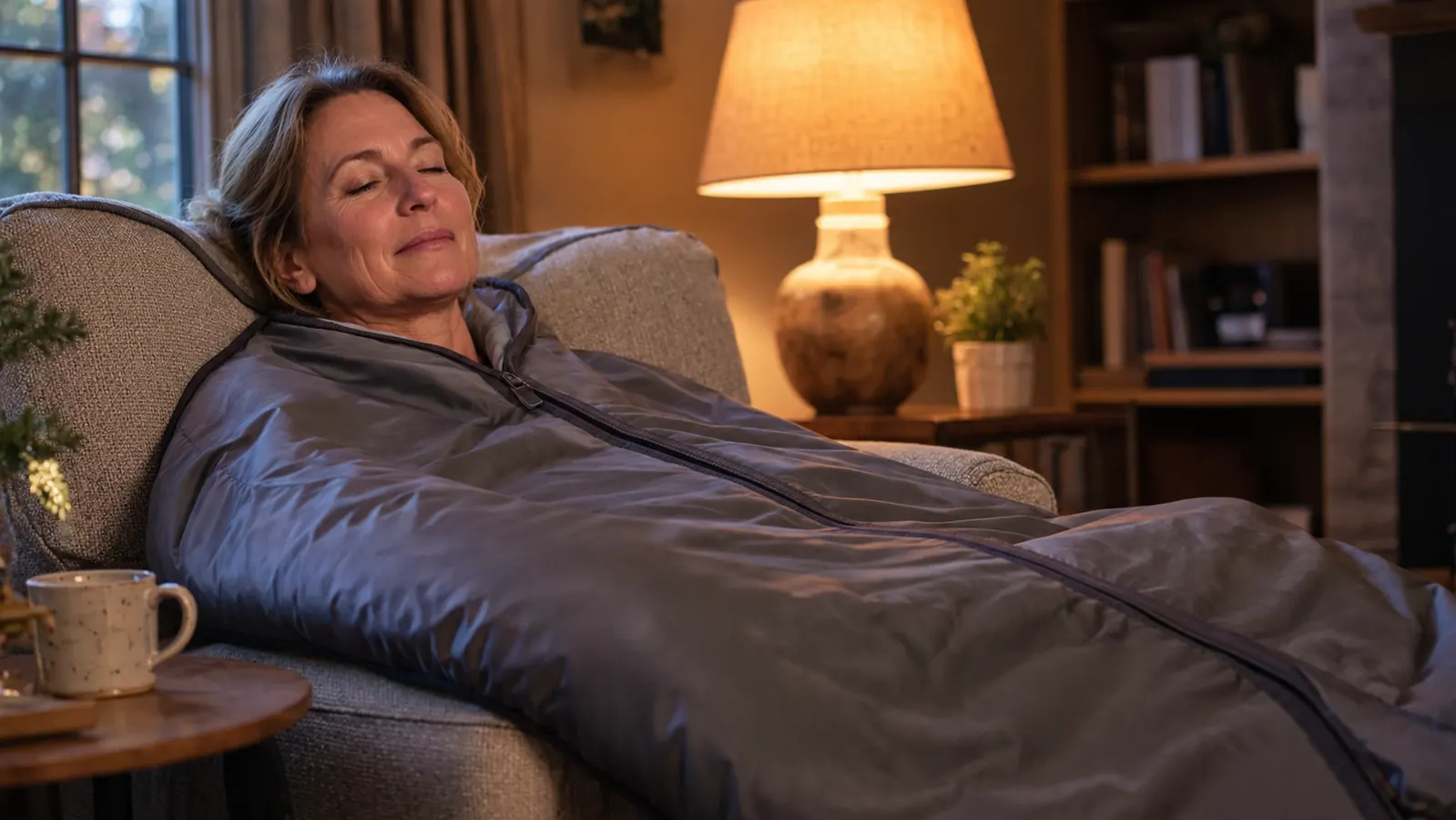
Most evenings around here, the hard part is not the workout. It is the stopping. I walk on the treadmill most mornings, and I spent twenty-five years as a physical therapy assistant lifting and transferring patients, so my knees and lower back have opinions about everything. By eight o'clock, my body is still half in the day. The lights are on, the phone is in my hand, and the muscles in my neck are holding the whole afternoon. That is where the Lifepro infrared sauna blanket came into my routine.
A sauna blanket is exactly what it sounds like: a thick, zip-up heating pad you lie inside for a session of far infrared heat. It is not a medical device, and I am not here to sell you on detox claims. But as a way to build a repeatable wind-down routine, it has been genuinely useful. Here is how I set mine up, step by step, including the parts I got wrong the first few nights.
Start with the Lifepro BioRemedy blanket and build the routine around it
If you are pricing your first home sauna, the Lifepro BioRemedy Infrared Sauna Blanket is the most practical place to start. It heats up in minutes, packs flat, and does not require a dedicated room.
Amazon Check Today's Price on Amazon →Why I Added a Sauna Blanket to My Evenings
The idea came from a former patient, actually. She was a few years older than me and swore by her evening sauna sessions for her knees. I could not justify a full cabin sauna in our basement, and I was skeptical of the cheaper heating pads because they only cover one spot. The Lifepro blanket looked like a middle path, so I ordered one with the intention of testing it for a month and sending it back if it did not stick.
It stuck. Not because the heat fixed anything dramatic, but because the routine gave my body a clear end to the day. I have stiff knees and a lower back that complains after long winters, and the warmth genuinely loosens things up. But the bigger change was in how I transition from daytime to evening. That is the part I want to walk you through.
Step 1: Pick a spot you will actually use
My first mistake was aiming for the basement corner where I test recovery gear. It is the coldest room in the house, and the thought of lying still in a cold basement was the reason I skipped the blanket three nights in a row. So on wind-down nights I started carrying it upstairs to the corner of the living room, next to the chair I already sit in after dinner, and folding it back into its basement corner afterward. That changed everything. The routine should live where you already wind down, not where you think a sauna belongs.
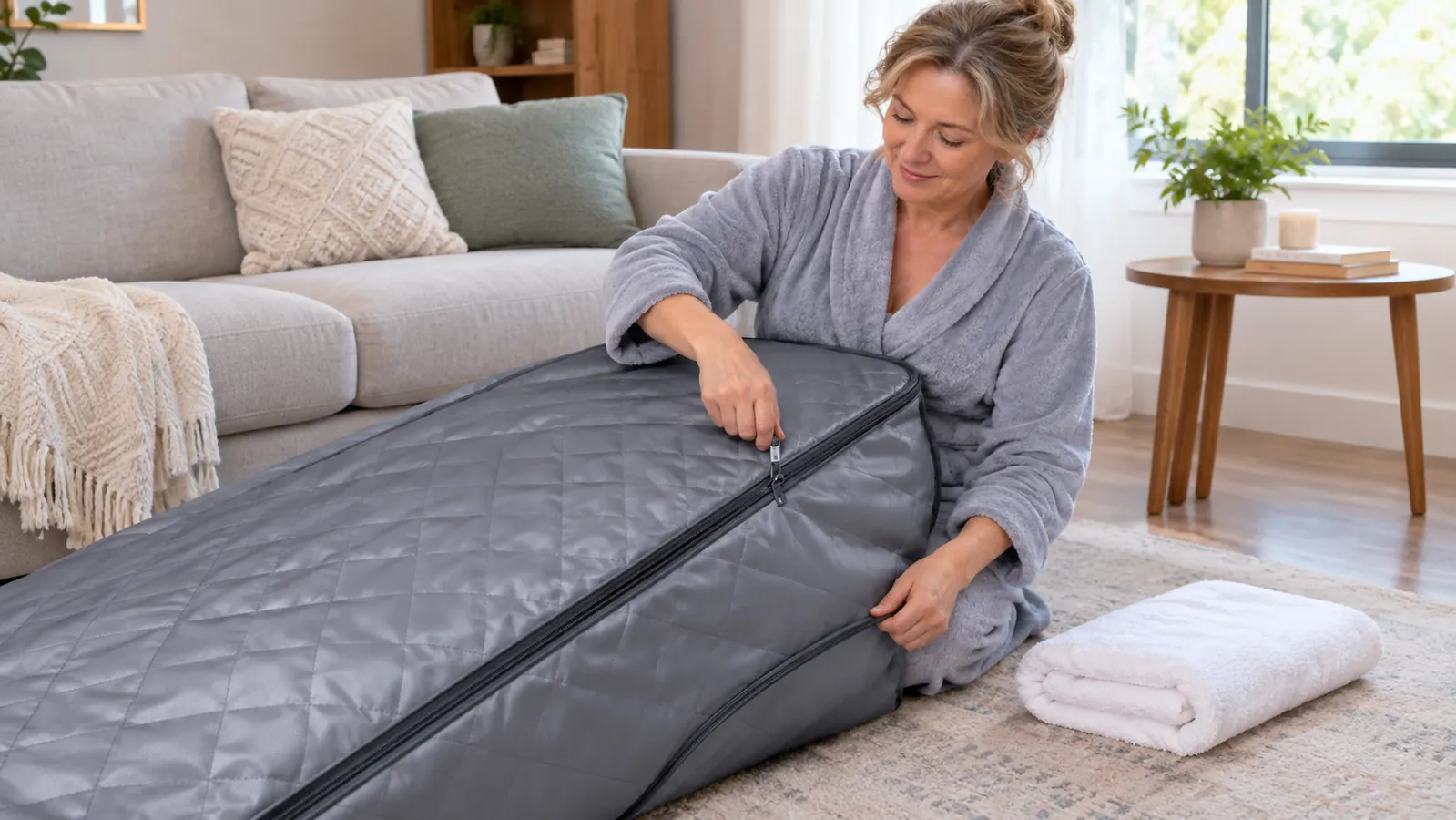
You need three things in that spot: an outlet within reach of the controller cord, a surface you do not mind getting warm, and a place to hang or drape the blanket after you unzip it. I use a padded mat on the floor and a chair arm for the controller. The blanket itself gets warm, so I lay a thick towel underneath it. That protects the rug and gives me something to grab when I am ready to get up.
One more thing: give yourself a clear line of sight to the clock or set a timer on your phone. A session feels shorter than you expect, and the controller has a timer, but I still set a separate alarm so I do not drift past my planned time.
Step 2: Set the temperature low the first week
The controller lets you pick a temperature, and the first night I turned it up to what I thought was a modest setting. It was too much. I lasted twelve minutes and felt flushed and restless, the opposite of calm. The next night I set it lower and stayed in for the full twenty minutes. That is the session length I have used ever since.
Start low and build. I tell people the same thing I used to tell patients starting a new exercise program: the first week is about learning the equipment, not getting a result. Your body needs to get used to lying still in heat. If your heart rate climbs or you feel dizzy, unzip and get out. Check with your own doctor before you start heat therapy, especially if you have a heart condition, are pregnant, or take blood pressure medication.
I also learned to wait a few minutes after eating. A full stomach and a heated blanket is a queasy combination. I aim for at least forty-five minutes after dinner, which fits naturally into the evening anyway.
Step 3: Build the same five-minute setup every night
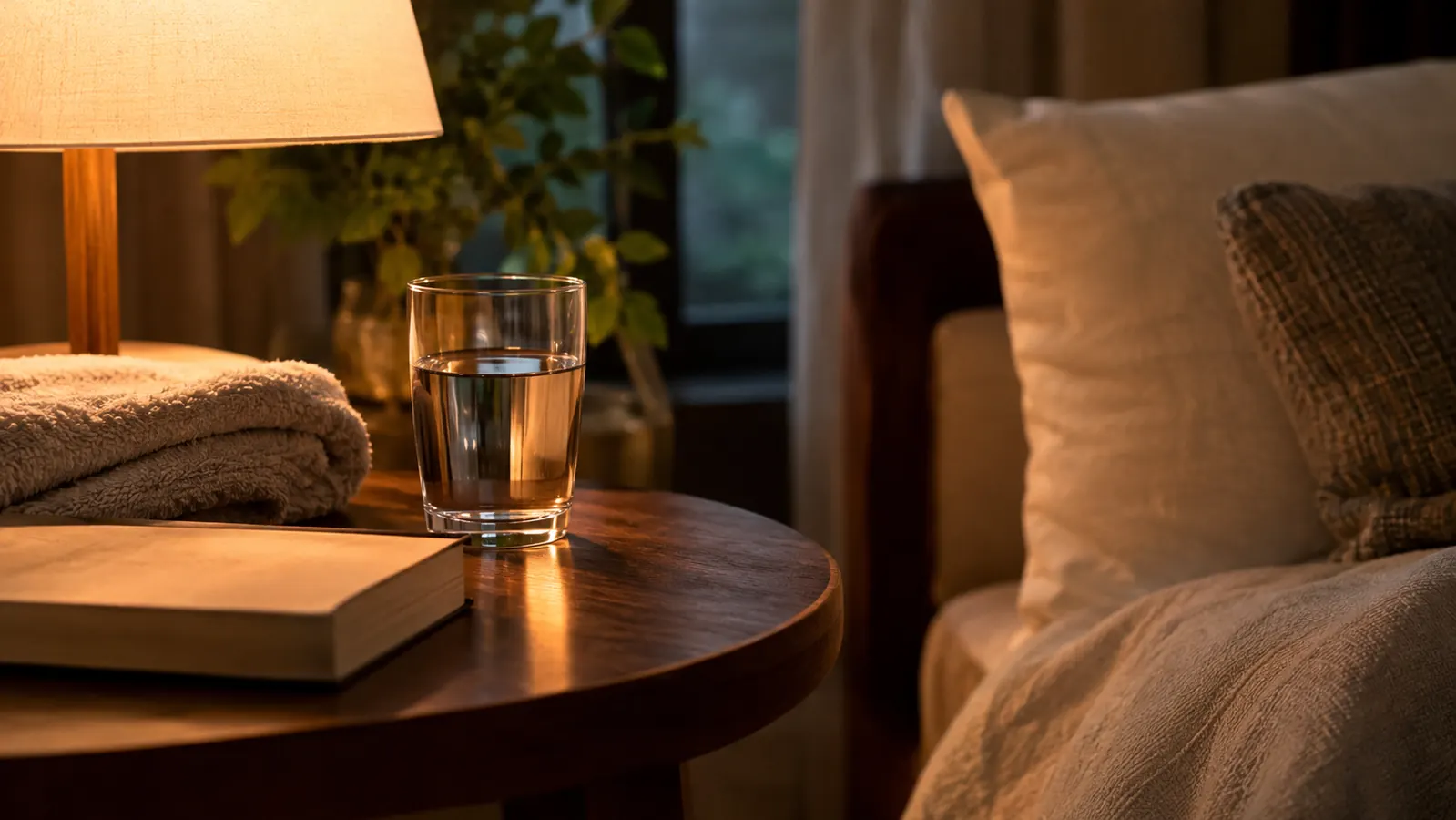
The routine is the point, so I made the setup boring and repeatable. I fill a glass of water and set it on the side table. I lay the towel, unroll the blanket, and plug in the controller. Then I get in, zip up, and start the timer. Five minutes, done. On nights when I am tired, the sameness is what gets me through it, because there is no decision to make.
I keep the controller within reach and the zipper pull facing up so I can open it fast if I need to. The Lifepro blanket has a generous size, and I never feel cramped in it, but I still check that the zipper is fully closed before I start. A gap lets the heat escape and makes the session feel uneven.
Water matters more than I expected. I drink a glass before I get in and keep the second glass on the table for after. I do not weigh myself or chase a number on a scale. I just do not want a headache from getting dehydrated, especially in winter when the house is dry.
Step 4: Use the time to actually wind down
The temptation is to scroll on your phone while you sit in the heat. I did that the first two nights and came out feeling the same as when I went in. The blanket only sets the stage. The unwinding is your job. Now I leave the phone on the table and use the session for something that does not need a screen: a paperback book, a crossword, or sometimes just sitting with my eyes closed.
I read for the first ten minutes and then put the book down for the last ten. The heat does its work, and my brain follows. It took about a week before I noticed the pattern, but now the feeling of the blanket warming up is enough to signal my body that the day is done. That is the part I did not expect from a piece of equipment.
Keep the lights low. I use one lamp in the corner instead of the overhead light. The whole point is to tell your nervous system that evening is happening, and bright light works against that.
Step 5: End the session the same way every night
When the timer goes off, I unzip and sit up slowly. I used to jump right up and fold the blanket immediately, and I always felt lightheaded. Now I stay seated for a minute, drink the second glass of water, and let my skin cool before I move. Then I unplug the controller, hang the blanket over the back of the chair to air out, and fold it once it is cool.
The cool-down is part of the routine, not the end of it. I brush my teeth, wash my face, and get into bed. I do not pick up my phone again unless something is genuinely urgent. The whole sequence, from plugging in the blanket to lights out, takes about forty-five minutes, and my sleep has been noticeably more settled.
One honest note: the blanket is not silent. The controller makes a soft hum and the material rustles when you shift. It took me two or three nights to stop noticing it. Now I find the hum almost soothing, but if you need total silence to relax, it is worth knowing before you buy.
What Else Helps
A few things made the routine stick that have nothing to do with the blanket itself. I keep a dedicated pair of loose sweatpants and a long-sleeve shirt for sessions, so I am not sitting in the blanket in whatever I wore all day. I wash the inside cover every couple of weeks, because it does get damp. And I stopped treating the session as a recovery treatment and started treating it as the signal that the day is over. That shift mattered more than any setting on the controller.
I also compared the Lifepro blanket against the other options I had around the house. A regular heating pad is fine for a sore spot, but it does not wrap around your whole body or create the same kind of session. A full infrared cabin sauna is a bigger investment and needs space and assembly. The blanket sits between the two: more than a pad, far less than a cabin, and it folds into a bag when company comes over. If you are choosing between a blanket and a steam tent, the blanket is easier to store and simpler to set up, though the tent gives you more room to sit up. It depends on whether you want a lying-down ritual or a sitting-up one.
One more habit that helped: I stopped checking the clock every few minutes. The controller timer handles the end of the session, so I do not need to watch it. Giving myself permission to not manage the time was oddly freeing. The session ends when the timer says so, and I trust it.
The blanket only sets the stage. The unwinding is your job.
What the Sessions Actually Feel Like
The first few minutes are the strangest. You are lying still, wrapped in warmth, and your brain keeps waiting for something to happen. Then about ten minutes in, the heat settles in and you stop noticing it. That is when the session gets good. The blanket is warm but not aggressive, more like a heavy heated blanket than a sauna, and the heat stays even across your back and legs.
I run it for twenty minutes most nights. Some nights I add five more if I have been on my feet all day. The controller makes it easy to adjust, and the timer means I do not have to think about it. By the end, my shoulders are noticeably less tight and my knees feel looser when I stand up. The feeling lasts into the evening, which is the part I keep coming back for.
The Cost Picture
I do not like talking about price in reviews because it changes, so I will talk about cost in a different way. The Lifepro blanket costs a fraction of what a cabin sauna costs, it needs no installation, and it folds flat when you are not using it. The electricity use is modest, a few cents per session by my rough math, and there is no membership fee. For a home routine, that is a reasonable trade.
The accessories are minimal: a thick towel, a glass of water, and something to read. I already owned all of them. That is the whole budget. Compared with a gym membership or a spa visit, the blanket pays for itself in how often it actually gets used.
What It Does Not Do
I want to be direct about this. A sauna blanket does not detoxify your body in any measurable way, and it is not a weight-loss tool. It does not replace physical therapy, and it is not a treatment for any specific condition. What it does is warm your muscles, loosen tight spots, and give you a reason to sit still for twenty minutes. That is a real benefit. It is just not a medical one.
If you are hoping for a dramatic health change, you will be disappointed. If you are hoping for a comfortable evening ritual that leaves you feeling looser and calmer, you will probably be pleased. Managing expectations is half of any routine, and I would rather you know that before you buy than find out after.
Who This Is For
This routine is for someone who already knows that recovery does not have to be complicated. It is for the person who wants a clear signal that the workday is over, who has sore shoulders from the desk or stiff knees from the trail, and who would rather spend an evening at home than drive to a gym or a spa. If that sounds like you, a sauna blanket is a reasonable place to start.
Who Should Skip It
Skip it if you want a true sauna experience with steam and high ambient heat, or if you have a health condition that rules out heat therapy. Skip it if you are looking for a weight-loss device, because that is not what this is. And skip it if you cannot commit to the routine, because the blanket only works when you use it. There is no point owning one if it is going to live in a closet.
Also skip it if you simply hate lying still. Some people need to be moving to relax, and there is nothing wrong with that. The blanket asks you to be still for twenty minutes, and if that sounds like a chore, it will be. A warm shower or a walk around the block might serve you better.
The Bottom Line
I have had the Lifepro BioRemedy blanket in my evening rotation for a few months now, and it has earned a permanent spot. It is not a cure-all, and I would not claim it is one. It is a comfortable, repeatable way to spend forty-five minutes letting the day drain out of my shoulders. For that job, it has been worth every minute.
If you are still deciding, my advice is to start with a two-week trial and keep the receipt. Use it five nights in a row before you judge it. The first couple of sessions are about learning the blanket. The routine shows up later.
Give the Lifepro BioRemedy blanket a fair two-week trial
Two weeks is enough time to build the habit and decide if the routine fits your evenings. If it does not work for you, send it back. That is the risk-free way to test it.
Amazon Check Today's Price on Amazon →