
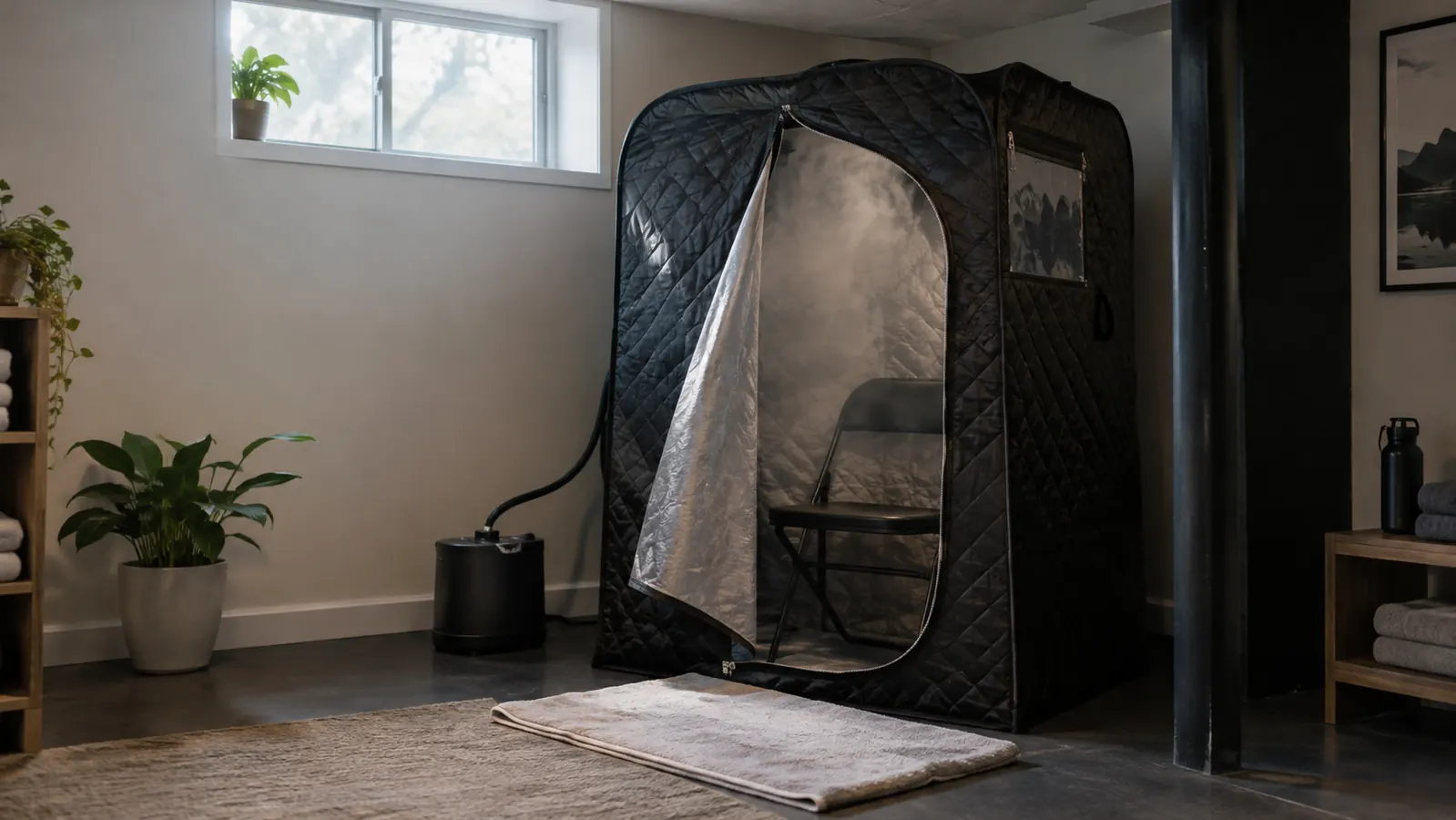
I will start with the part nobody puts in the product photos: the first time I set up the Durasage portable steam sauna in our basement, I stood inside it for about four minutes before I felt a little lightheaded and had to unzip the door. I am a retired physical therapy assistant, I spent 25 years telling patients to start slow with any new routine, and I still tried to skip my own advice. That first session was not a failure. It was the most useful thing that happened in my first month with this sauna, because it taught me exactly how the machine actually behaves.
I bought this sauna for the same reason most people do. I have stiff knees and a lower back that complains after long Minnesota winters, and I wanted something I could use at home without driving to a gym. The Durasage portable steam sauna is a personal tent with an 800W steam generator and a 60-minute timer, and it costs a fraction of what a built-in sauna runs. After several months of regular use, I have a clear picture of what it does well, what it does not do, and the things I wish someone had told me before I ordered it.
The Quick Verdict
A genuinely useful home steam sauna for the money, with real limits: setup is fiddly the first time, the steam takes a while to build, and it will never match a proper sauna. For a warm, private wind-down ritual, it does the job.
Amazon Check Today's Price →Want the honest version? Here is the short version before the long one.
The Durasage portable steam sauna is a real steam tent, not a toy. It heats up, it makes you sweat, and it fits in a closet when you are done. It also takes patience, a waterproof floor plan, and about 20 minutes from setup to full steam. If that sounds like a fair trade for a home sauna that costs a fraction of a built-in unit, this is worth a close look.
Amazon Check Today's Price on Amazon →How I've Used It
I have used the Durasage sauna three to four times a week for about five months, mostly in the evening after my walk on the treadmill. My routine is simple: I put a towel on the floor, set up the folding chair that comes with it, fill the water tank, and turn on the steam generator. The 60-minute timer lets me set a session and forget about it, which matters when I am trying to wind down rather than manage equipment.
The first few sessions, I kept the temperature lower and the sessions short. After a few weeks, I settled into a rhythm of about 30 to 40 minutes, with the steam generator running for the first 20 minutes and then just the residual heat. I keep a bottle of water on the floor next to the chair, and I always have a dry towel waiting outside the zipper. The whole routine takes about an hour from setup to cleanup, and I have come to look forward to it in a way I did not expect.
One cold Tuesday in mid-January, after I had shoveled the driveway for the third time that week, I set up the sauna and sat down feeling like a different person when I got out. That was the session that made the routine stick. I had been using it for about six weeks by then, and I could point to the exact day my lower back stopped complaining on my morning treadmill walk. I do not want to oversell that, because correlation is not causation, but the pattern was real enough that I noticed it. I also noticed that the sessions went faster once I stopped fighting the machine. I filled the water tank to the line, started the generator, and used the 10 minutes of warm-up to fold laundry or stretch on the floor. By the time the steam was thick, I was ready to sit still, which is the whole point of the thing.
One honest note: the first time you set this up, it will take longer than you expect. The frame is a set of poles that you thread through fabric sleeves, and the instructions are mostly pictures. I am handy enough that it was not hard, but it was not instant either. Give yourself a full hour the first time, and do not do what I did, which was to start setting it up at 9 PM on a weeknight.
What Nobody Tells You About Setup
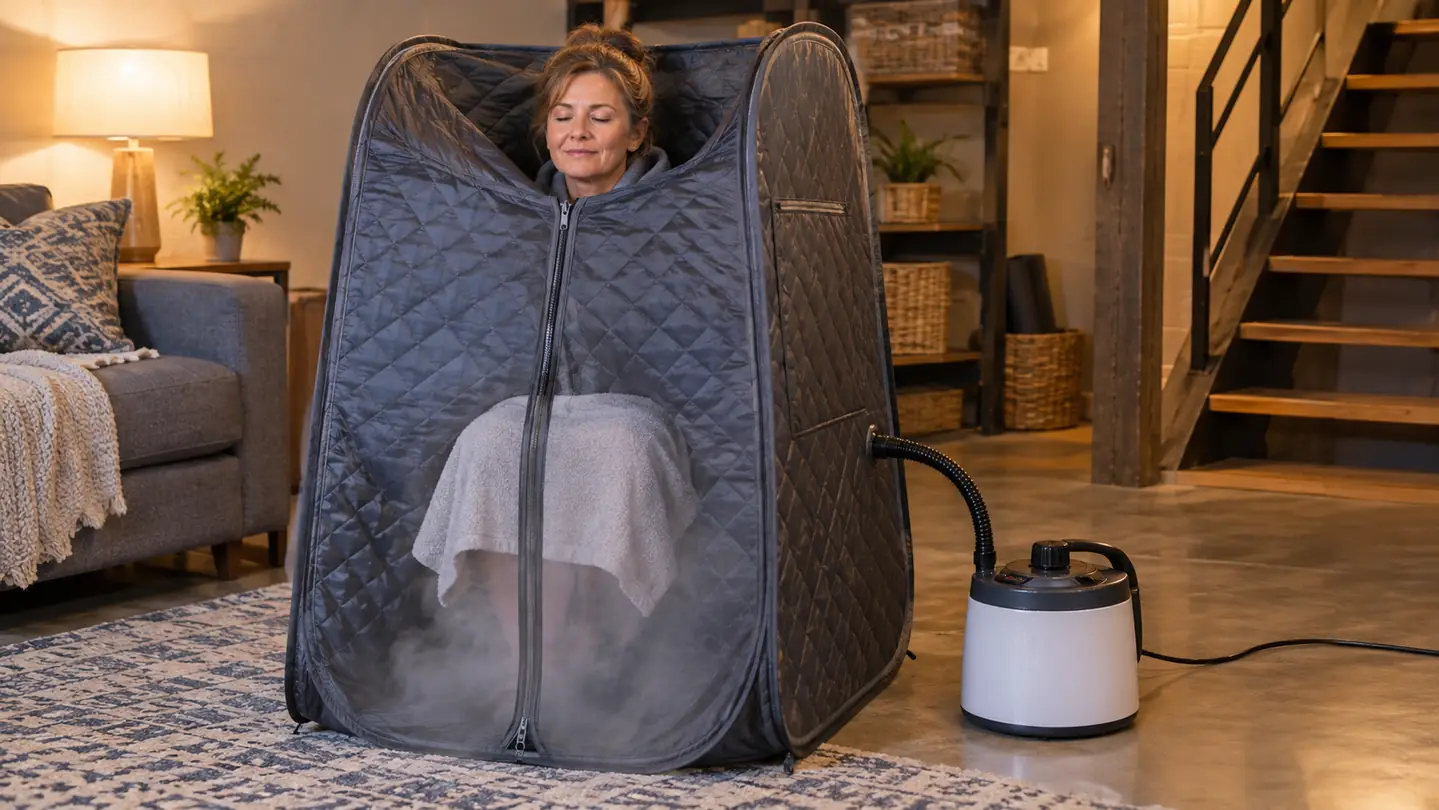
The product photos make the Durasage sauna look like it pops open like a camping tent. It does not. You assemble a pole frame, drape the fabric over it, zip the sides, and then thread the steam hose through a grommet near the floor. The chair goes inside, the generator sits outside, and the water tank sits on top of the generator. It is a 20-minute job once you know what you are doing, and a 45-minute job the first time.
The other thing the photos do not show is the floor. The sauna does not come with a floor, and the bottom edge of the tent does not seal against the ground. You will want a towel or a mat underneath, both to protect your floor from condensation and to keep the steam from escaping under the walls. I use a bath towel folded in half, and I replace it when it gets damp. A waterproof mat would be even better, especially if your floor is not tile.
The steam generator is the loudest part of the whole setup. It makes a steady hum and a periodic gurgling sound as it pulls water from the tank. It is not loud enough to be annoying, but it is loud enough that you will hear it clearly, and if you are hoping for a silent spa experience, adjust your expectations. I actually find the sound soothing now, the way a humidifier is soothing, but it is worth knowing before you buy.
I timed myself the second time I set it up, because the first attempt had been such a mess. From unzipping the storage bag to having the generator running, it took 23 minutes. The third time took 18. The tent has a rhythm to it once you find it: poles first, then the fabric, then the grommet, then the hose. I also learned to check the zipper before I started, because the first time I got the whole thing assembled and then discovered the front zipper was twisted, which meant taking the fabric off the frame and starting that part over. That is the kind of small frustration the photos never warn you about.
The first time I set it up, I stood inside for four minutes and had to unzip the door. That was the most useful thing that happened in my first month with this sauna.
How the Steam Actually Feels
Here is the thing about a portable steam sauna: the heat is not like a dry sauna. It is wet, heavy, and it builds from the floor up. When you first sit down, your feet and lower legs warm up first, and the air at face level stays cooler for a while. Over the first 10 to 15 minutes, the steam fills the tent and the temperature evens out, but the bottom of the tent is always the warmest part.
I measured the temperature inside with a small thermometer I already owned. It took about 15 minutes to reach a steady temperature in the low 100s Fahrenheit, and it stayed there for the rest of the session. That is much lower than a traditional sauna, which runs 150 to 190 degrees. The steam does most of the work here: it is the humidity that makes you sweat, not the raw heat. If you are expecting a dry, intense sauna experience, this will not give it to you.
The sweat, though, is real. I come out of a 35-minute session with my hair damp and my skin flushed, and I feel the same loosened-up feeling I get after a warm bath. For someone with stiff knees and a tight lower back, that feeling is the whole point. It is not a workout and it is not a medical treatment, but it is a genuinely pleasant way to spend 40 minutes, and I look forward to it in a way I never looked forward to stretching.
One evening in February I sat with a thermometer and a notepad, which is the kind of thing I do because I am a retired physical therapy assistant and I like data. At five minutes the thermometer read 88 degrees at seat level. At ten minutes it read 96. At fifteen it settled at 104 and stayed there for the rest of the session. The air near my head stayed noticeably cooler the whole time, maybe ten degrees cooler, which is why I do not blame anyone who says the sauna does not feel hot enough. The heat is real, but it is a lower-body heat, and you have to be okay with that.
The Limits You Need to Know
I want to be direct about what this sauna does not do. It does not get as hot as a traditional sauna. It does not have the dry, radiant heat that some people love. It does not wrap your whole body evenly, because the steam pools near the floor and your head stays cooler. And it is not a medical device. I am not a doctor, and I tell everyone the same thing I told my patients: check with your own doctor before heat therapy, especially if you have a heart condition, are pregnant, or take blood pressure medication.
The 800W steam generator is also not fast. From a cold start, it takes a good 10 to 15 minutes to produce meaningful steam. That means a full session is really a 45-minute commitment, not a 20-minute one. If you are the kind of person who wants to hop in and out quickly, this sauna will frustrate you. I have learned to start the generator, set the timer, and go fold laundry for 10 minutes before I get in.
The chair is another honest limit. It is a basic folding chair, the kind you might use at a picnic, and it is not padded. I use a folded towel on the seat, and I still find myself shifting around after 20 minutes. It is fine for a 30-minute session, but do not expect a spa chair. If you have back trouble, you will want to experiment with how you sit, or use a small stool instead.
The other limit I did not expect was the cleanup. The tent sweats. On a cold night, condensation runs down the inside walls and pools on the towel I put on the floor, and if I leave the sauna up overnight, the inside smells like a damp towel by morning. I learned to air it out for 15 minutes with the zipper open before I pack it away, and I wipe the inside walls with a dry towel. That adds another few minutes to the routine, and it is the part I would complain about if I had to name one. It is manageable, but it is real, and nobody mentions it in the reviews.

Who This Is For
This sauna is for someone who wants a warm, private, repeatable wind-down ritual at home, without spending thousands of dollars on a built-in unit. It is for people who like the feeling of a warm bath but want something that does not use as much water. It is for people with sore joints or tight muscles who want to sit in heat and humidity for half an hour and see how it feels. It is for people who live in cold climates and want a little warmth in the middle of February.
It is also for people who are honest with themselves about their habits. This sauna works if you use it. The setup and cleanup take about 10 minutes each way, and if that feels like too much, a sauna blanket or an infrared blanket might be a better fit. But if you are willing to build a small routine around it, the Durasage portable steam sauna is a lot of value for the money.
Who Should Skip It
Skip this sauna if you want a dry, intense, traditional sauna experience. The steam is wet and the temperature is modest, and no amount of patience will turn it into a Finnish-style sauna. Skip it if you are short on space or patience for assembly, because the tent takes up a corner of a room even when it is packed away, and the setup is not instant. Skip it if you are looking for weight loss or detox promises, because that is not what this is, and anyone who tells you otherwise is selling something.
Skip it if you are claustrophobic. The zipper closes you in up to your chin, and the steam makes the air feel heavy. I am comfortable in small spaces, so it does not bother me, but I have had friends try it and feel closed in. If you are not sure, you can leave the zipper open a few inches at the top, which helps a lot. I do that myself when I want a cooler session.
Alternatives I Considered
Before I settled on the Durasage, I looked hard at infrared sauna blankets. They are cheaper, they heat up faster, and they store flat. What pushed me away from a blanket was the feeling of being wrapped and the dry heat. I wanted the wet, enveloping warmth of steam, and a blanket cannot give you that. I also looked at full-size home saunas, but the price and the space requirements were more than I wanted to take on for a first sauna.
I almost bought an infrared blanket in November, and I still think it is the right call for a lot of people. A friend let me borrow hers for one evening before I ordered the Durasage, and that test settled it. The dry heat made my skin feel tight and my sinuses felt parched, and I realized I wanted the humidity as much as the warmth. That one evening saved me from buying the wrong thing.
The portable steam tent sits in a useful middle place. It is more immersive than a blanket and far less expensive than a built-in sauna. It is not a substitute for either, but it does not need to be. For my purposes, a warm, private, repeatable ritual in the basement, it has been exactly right.
What I Liked
- Real wet steam heat that builds from the floor up
- Fits in a closet or corner when packed away
- 60-minute timer makes sessions easy to manage
- Genuinely relaxing wind-down ritual after a walk
- Much less expensive than a built-in sauna
Where It Falls Short
- Setup and cleanup add about 20 minutes to every session
- Takes 10 to 15 minutes to produce meaningful steam
- No floor included, so towels or a mat are required
- Chair is basic and unpadded
- Modest temperatures compared to a traditional sauna
Still deciding? Here is what I would do.
If you want a warm, wet, private sauna ritual at home and you are willing to build a small routine around setup and cleanup, the Durasage portable steam sauna is a solid, honest choice. If you want dry heat or instant sessions, keep looking. For everyone else, check today's price and see if it fits your routine.
Amazon Check Today's Price on Amazon →